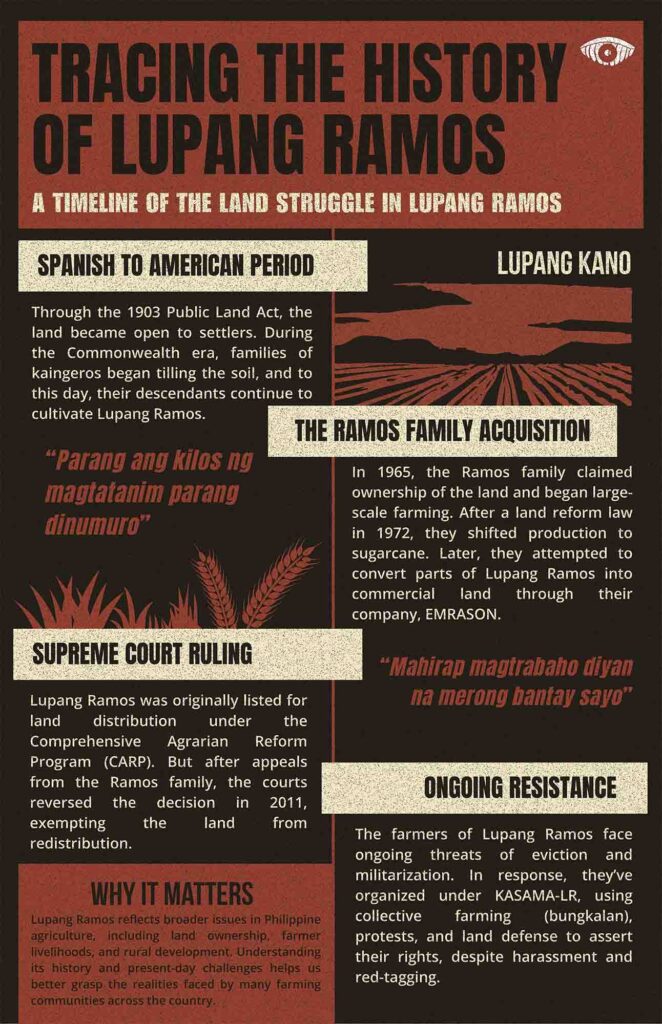
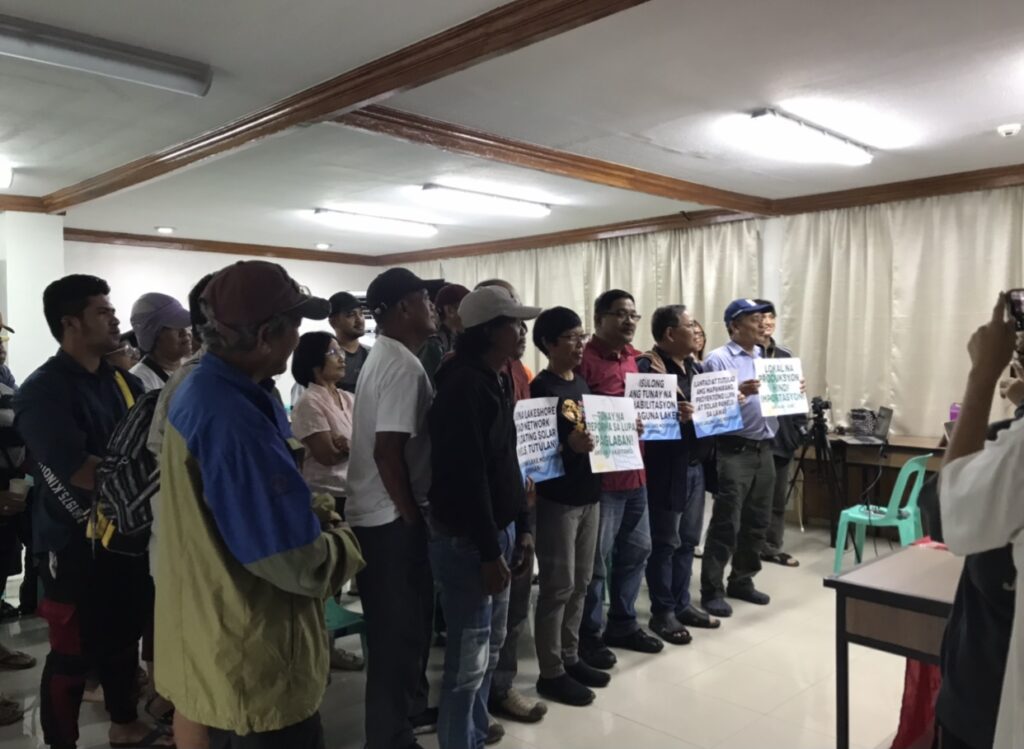
“Sa Lilim ng Ani” is a multimedia campaign that brings to light the lived experiences of the farmers of Lupang Ramos, a land rich in history, hardship, and hope.
Through powerful storytelling, video documentary series, and youth driven initiatives, this campaign invites you to step into their world, hear their voices, and take part in the movement in shaping a more just and sustainable future for Philippine agriculture.
Watch now!
Sa Lilim ng Ani
Episode 1: Ang Kabuhayan
This episode traces the historical roots of Lupang Ramos, beginning with the Philippines’ agricultural identity and into the long-standing land conflict that shapes the farmers’ fight today.
This episode traces the historical roots of Lupang Ramos, beginning with the Philippines’ agricultural identity and into the long-standing land conflict that shapes the farmers’ fight today.
For decades, the farmers of Lupang Ramos have been embroiled in a bitter land dispute, fighting for their rights to the land they have cultivated for generations. The 372-hectare agricultural land, located in Dasmariñas, Cavite, has been a battleground between the farmers and various claimants, including descendants of the Ramos family, Ayala Land, and Luke Roxas of St. Francis Square.
Explore advocacy movements you can support, from land reform to climate-aware farming.
Title
Title
Title
Title
Advocate Now!
Explore advocacy movements you can support, from land reform to climate-aware farming.
Title
Title
Title
Title
Advocate Now!
Explore advocacy movements you can support, from land reform to climate-aware farming.
Title
Title
Title
Title
The Voice and Strength of the Filipino Peasantry
The Kilusang Magbubukid ng Pilipinas (KMP) is a grassroots organization made up of farmers, agricultural workers, rural communities, and advocates with a united goal to transform the deeply unequal land system in the Philippines by empowering the peasantry and securing their right to land, livelihood, and dignity.