Sa Lilim ng Ani

The Persisting Militarization in Lupang Ramos

Author: Shane Labrador || Published Date: August 14, 2025
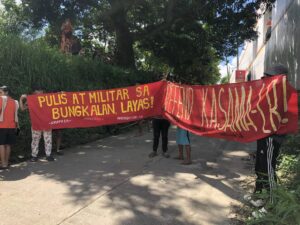
Photo from KASAMA-TK

Photo from KASAMA-TK

“Red-tagging” has been an ongoing phenominal issue in the Philippines but it intensified during the presidential administration of Duterte. Red-tagging is a form of threat and harassment to human rights defenders, political activists, lawyers, and other targeted groups affiliated with the progressive left—and farmers are no exception. Oftentimes they are labeled as “terrorist” for being critical and for voicing out the injustices they face.
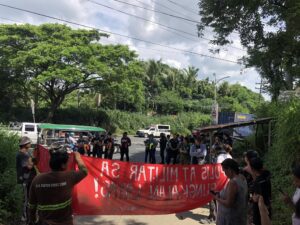
Photo from KASAMA-TK

Decades of legal battle on Lupang Ramos led to farmers organizing to stand their ground to fight for their right to ownership of the land they till and voice out genuine land reform and actual government support and aid. On September 26, 2024, about 100 combined military and police personel—accompanied by government personnel agencies such as Local Government Units (LGUs) and—reportedly attempted to enter Lupang Ramos through a so-called “inspection” and construction of a checkpoint along the entrance of the community in attempt to harass, intimidate, and red-tag the local peasant organization Kasama-LR.

Currently, the residents in the community prevented the entry of state forces through construction of a barricade.

The dangers of red-tagging causes multiple risks that puts the farmer’s lives in danger. According to an interview with Ka Ronnie Manalo—the general secretary of Kilusang Magbubukid ng Pilipinas(KMP)—during the Duterte administration, there were 336 victims of killings in the sector of farmers with 55 missing. There were also about 22 massacres that happened during the Duterte administration alone.

REFERENCES AND IMAGE SOURCES

International Coalition for Human Rights in the Philippines. (2024, September 28). Militarization intensifies in Lupang Ramos in Dasmariñas, Cavite. https://ichrp.net/militarization-intensifies-in-lupang-ramos-in-dasmarinas-cavite/

Photo from KASAMA-TK Facebook

Recommended Materials

Filipino farmers and the growing concern of youth’s disconnection

Filipino farmers are now increasingly worried about the future of agriculture as less young people show interest in farming. Sa Lilim ng Ani recently conducted a survey that highlights the contrast between how farmers live and how the youth perceive them.

The Irony of an Agricultural Country with Food Insecurity

Filipino culture is rooted in family, tradition, and a strong sense of community. These dishes may be different but all of them have two components that are necessary to complete a Filipino meal: rice and vegetables. These ingredients are present in every household because local farmers work passionately to provide the nation’s staples.

How Climate Change Affects Agriculture​

The Philippines, situated along the Pacific Typhoon Belt, has always been susceptible to typhoons. However, the escalating effects of climate change are intensifying this vulnerability. The increasing frequency and ferocity of tropical cyclones, coupled with soaring temperatures and erratic weather patterns, are greatly impacting the country’s agricultural sector and the livelihoods of its farmers.